Commercial Concrete & Sidewalk Cleaning
Walkways, entrances, loading aprons and flatwork — including the winter salt residue that grey concrete hides.
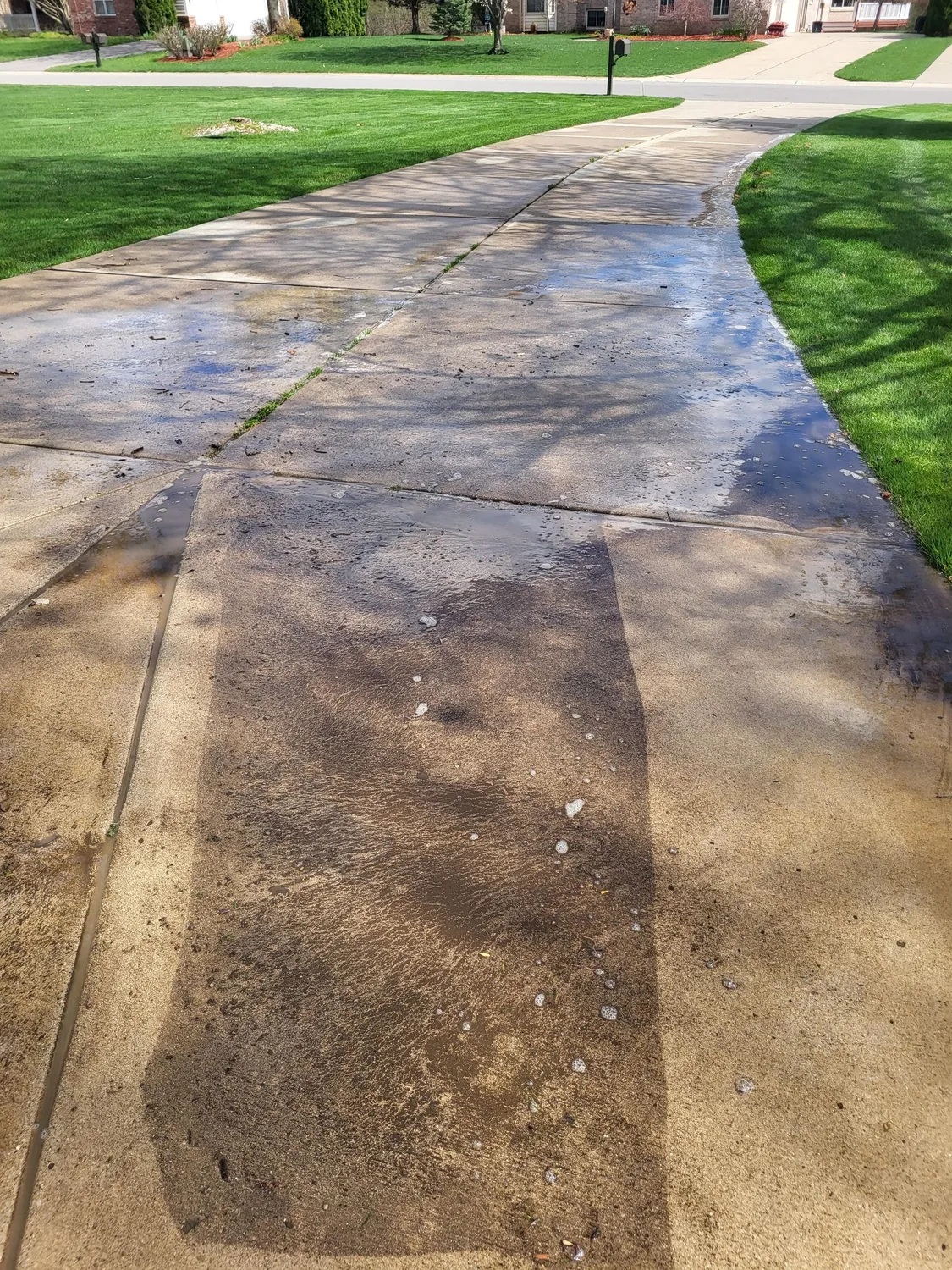
Concrete is the surface on a commercial property that gets the most traffic and the least attention, and it fails quietly. It does not look dirty — it looks like concrete. The grey is the dirt. The way anyone finds this out is by cleaning a strip of it, at which point the difference between the strip and everything around it is the whole argument.
Michigan salt is the actual problem
De-icing salt is the single most destructive thing on Wayne County commercial flatwork, and its damage is cumulative and mostly invisible until it is not. Chloride soaks into the pore structure over winter. Freeze-thaw cycling — and metro Detroit runs through dozens of them between December and March — expands the water in those pores and pops the surface off in flakes. That is spalling, and once concrete spalls the surface does not come back; it gets patched or replaced. Washing the chloride residue out at the end of the salt season is the cheapest structural maintenance on the property, and it is the reason spring is the right time rather than a convenient one.
What the stains actually are
Orange-brown streaks fanning out from a sprinkler head are iron from irrigation water, and they need a rust treatment rather than pressure. A white powdery bloom is efflorescence, salts migrating out of the slab, and scrubbing it just brings more. Dark patches at a loading door or a dumpster are petroleum, which has to be lifted with a degreaser before any rinse or it just spreads into a bigger, fainter version of itself. Black spots in a line at an entrance are gum. Green or black film in a shaded stretch is organic growth, and on a walkway that is a slip liability rather than an appearance problem. Five different causes, five different treatments, one surface that looks uniformly grey to everyone who has not cleaned it.
Surface cleaner, not a wand
Flatwork is done with a surface cleaner — the rotating enclosed head — not a wand. A wand leaves stripes and zebra-striping on concrete is the signature of a job done fast by someone who does not do much of it, and it cannot be fixed except by doing the whole slab again. The surface cleaner also uses far less water for the same area and keeps the run-off contained, which matters when the next thing downhill is a storm drain.
The evidence for this one
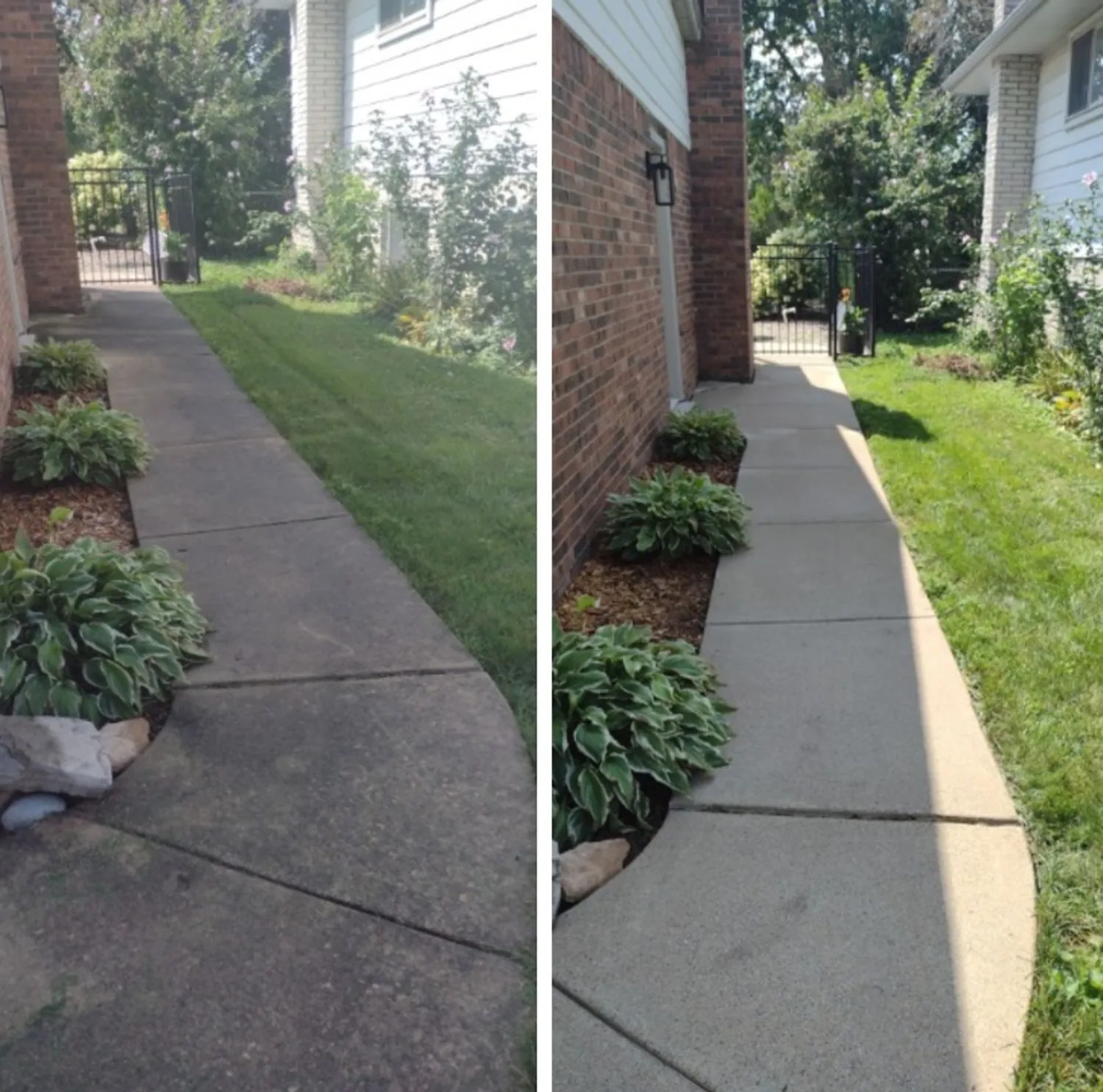
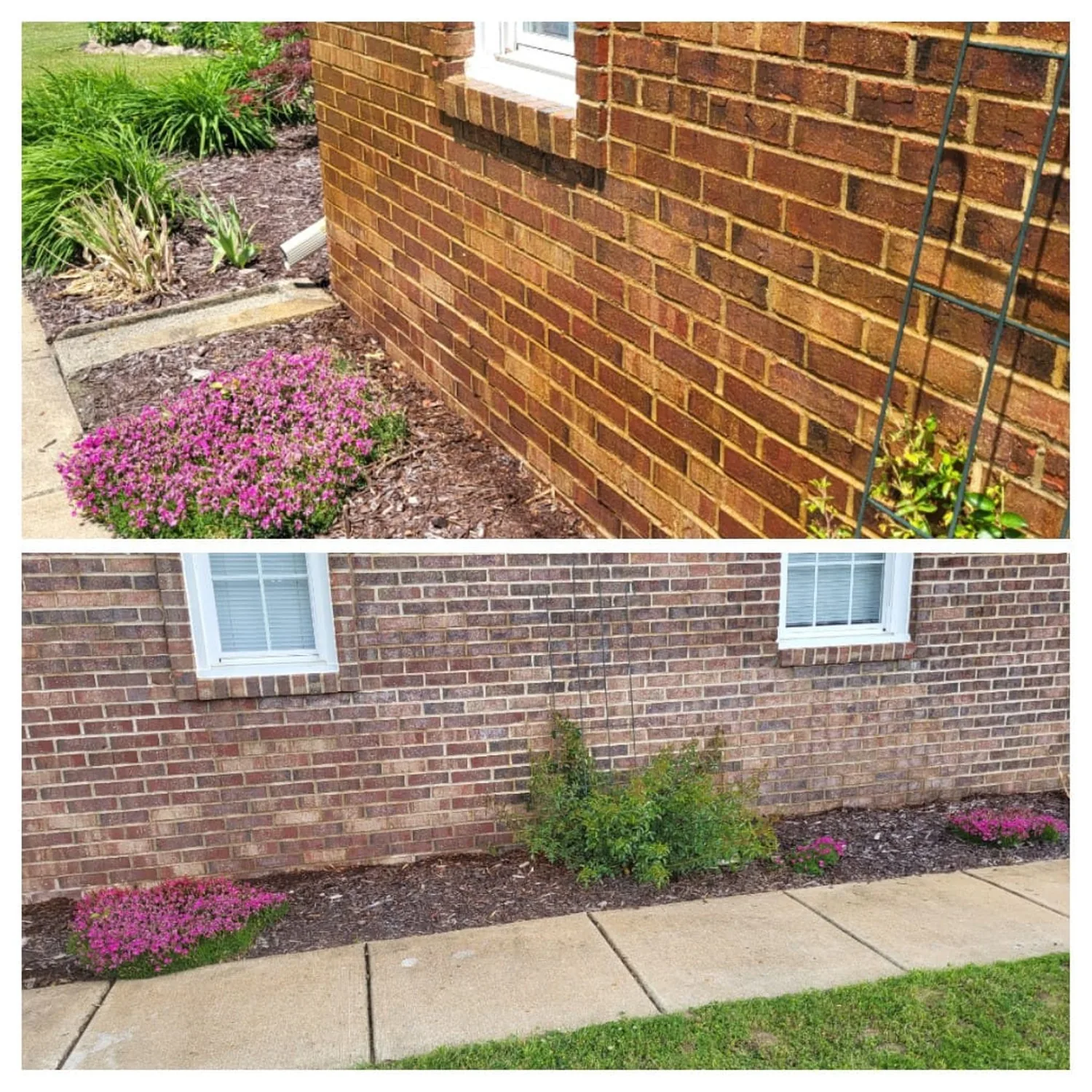
Driveway and sidewalk cleaning and hardscape cleaning are both service lines on their own site, and their photographs include several before-and-after sets of concrete flatwork and walkways — including one walkway run between two buildings. Their reviews name it directly: one customer describes them washing "my driveway and walk" and calls the results remarkable; another writes that their "patio paver bricks look amazing".
Text a photo, get a straight answer
The fastest way to get a useful answer on a commercial property is a photograph of the problem. Send one and Chris can usually tell you what it is, whether it needs pressure or chemistry, and whether it is worth doing before anybody visits.
Their own words for this service: “A clean driveway and sidewalk set the impression for your property. We'll remove algae and dirt buildup.”
Their own photographs of this work
Every caption here was written after looking at the photograph.
Questions about concrete & sidewalks
When is the right time of year for this in Michigan?
Spring, once the salt season is genuinely over — usually April into May. Washing the winter chloride residue out of the slab before the summer heat bakes it in is the pass that does the most good. Autumn is a good second pass for appearance and for leaf tannin staining.
Will cleaning make old concrete look worse?
It will make it look accurate. Cleaning does not cause spalling, but it does reveal it — flaking and pitting that were hidden under uniform grey become visible, and so does patchwork from previous repairs. That is worth knowing before you budget, and it is worth hearing at the quote rather than on the day.
Can you get oil stains out of the loading area?
Petroleum has to be lifted with a degreaser and given dwell time, not rinsed. Old, deeply soaked stains on porous concrete often lighten substantially rather than disappear, and anyone who promises a full removal on a decade-old stain without looking at it is guessing. Point them out at the quote and get a straight answer about what the realistic result is.
What about the run-off?
On flatwork it is worth asking, because the honest answer depends on the property. A surface cleaner keeps the water contained far better than a wand does, and where the run-off goes — a storm drain, a landscape bed, a sanitary connection — is part of walking the site before the work rather than something to discover mid-job.
Where this comes up
The property types this service is usually part of a scope for.
Property Managers & Commercial Landlords
One contractor, several properties, a scope you can put in a budget and hand to a board.
What we cleanRetail, Strip Plazas & Shopping Centers
The walkway, the entrances and the glass every customer of every tenant walks past.
What we cleanRestaurants, Bars & Food Service
Grease on the walkway, the dumpster pad, the patio and the drive-thru lane.
What we cleanOffices, Medical & Professional Buildings
Entrance approach, elevations and walkways for buildings where the client walks in the front door.
What we cleanOther services
Commercial Building Washing
Soft washing and pressure washing for building elevations — painted block, brick, metal panel, EIFS and vinyl.
Read moreStorefront & Retail Plaza Cleaning
Entrances, walkways, glass surrounds and the concrete customers actually walk on, cleaned before you open.
Read moreDumpster Pad & Enclosure Cleaning
The pad, the corral walls and the approach — the worst-smelling square footage on the property.
Read moreGet a quote for concrete & sidewalks
Call or text (734) 883-0972. Text a photo of the surface and get a straight answer first.
(734) 883-0972